The Rotten Potato

The Rotten Potato
"When I found out that our industrialized food system considers chicken manure an acceptable source of protein in cattle feed, it was clear to me that consumers and corporate agriculture have very different ideas about how we should produce food."
~DAN NAGENGAST
----------------------
When I first started researching all things agrarian, from agriculture to contemporary thought, it was clear to me I had diverged upon two paths in the woods, and having chose the road less traveled; for me it has made all the difference………………and then a quarter mile in, having just begun my journey (my wife steadfast by my side) I come across this small stature of a man who sticks a placard in my hand and in so softly of a chuckle says “Here’s your sign!” and walks off down a garden row, I look toward my wife and I shrug. Then I flip the slightly weathered barn-wood board around I notice the writing on the opposite side and it reads…………..
…..Welcome to the Revolution!
Though I know if you spoke with Herrick he’d tell you – that never happened, and he’d be right, I’ve taken a little literary license with my words and my walk. I’ve thoroughly enjoyed reading his book: Writings of a Deliberate Agrarian by Herrick Kimball, a fellow New Yorker who when I was first introduced to the online agrarian blogsphere, enjoyed his virtual writings, views and ideas on a regular basis and they were an encouragement to me to step out as well and make a mark, as I say taking electronic pen to ‘virtual’ paper. It only fitting to see his wonderful collection of essays go from paper to print.
The journey to the good life is often fit with unmerited joy when one finds favor in the simple things and takes time to directly contemplate what it is that makes this life we lead ~ living.
If I could encourage you, bring thought in to action and pick up a copy of the book today, you can find it at Cumberland Books on the web or you can order a copy from the authors web page here at www.thedeliberateagrarian.com You might just find the sudden need to plant something when your done……………………
----------------------and now the news……………..
Many have heard the expression “something is rotten in the state of Denmark”; a line from the play by William Shakespeare’s “Hamlet”, quoted by a palace guard after the apparition of the dead king of Denmark appears walking over the palace walls. It’s more common soliloquy now used to describe destruction or a situation when something is wrong. As is the case and the state of the union commonly referred to by our founding fathers as ‘these united states of America’.
From food to fuel to funding debt through foreign banks to bolster dollar hegemony the course of our modern culture has embraced a hedonistic worldview of self-gratification that rivals Rome, and as Rome went so goes the US or as an infamous sports announcer once said “…and that’s the ball game!” Perhaps someone should give Ben Bernanke a copy of Shakespeare’s book and highlight the advice the garrulous old man Polonius gives to his son; “Neither a lender nor a barrower be” but alas me thinks he would not listen, but laugh – for there lies in Washington (that brood of vipers and thieves den) either deceivers or the deceived, I’d dare say an honest lot of them could be hitherto counted using the fingers & toes method of numerical excellence with out the necessity of a man removing his shoes!
No longer are the days of the “Good Samaritan” as we live in a ‘culture of corruption’ that despite democratic political pandering or republican rhetorical recitation it is as endemic ailment in the whole of a soulless American society that goes past the Washington beltway and extends a sluggish miserable hand deep in to the bread basket of our economy. Ours is not a red state - blue state affair. If we are to survive as a ‘nation of states’ ours must be a Red, White & Blue State of concern and correction. If He who’s is Sovereign and created all things overlooks our arrears and turns a blind eye to the debauchery we as a nation have brought upon ourselves through the leadership of despots, upon that day He will have to apologize to Sodom for surely we rival them as a nation of immoderation, lacking responsibility and filled to the bridle in the blood of innocence.
The concept of “united we stand, divided we fall” derived from a popular 1768 tune entitled the “Liberty Song” by John Dickinson adopted as the state motto by, Isaac Shelby, the first governor of Kentucky is a far cry from the dirge we now dance to as a nation of divided persons through political punditry and media manipulation owned in whole (contracted in part) by the money interests and governmental ne’er-do-well’s. Race, hatred, class envy, religious intolerance and bigotry are promenaded across the pages of what passes for ‘news’ these days of ‘Fear & Blood’, when Terror is the word of the day and honest men cower in trepidation of lawmaking abuse that might deem their own conscious a violation and subject to public scrutiny. Leading one to the dangerous thought that perhaps ‘good men should do nothing’.
From food to fuel to funding debt through foreign banks to bolster dollar hegemony the course of our modern culture has embraced a hedonistic worldview of self-gratification that rivals Rome, and as Rome went so goes the US or as an infamous sports announcer once said “…and that’s the ball game!” Perhaps someone should give Ben Bernanke a copy of Shakespeare’s book and highlight the advice the garrulous old man Polonius gives to his son; “Neither a lender nor a barrower be” but alas me thinks he would not listen, but laugh – for there lies in Washington (that brood of vipers and thieves den) either deceivers or the deceived, I’d dare say an honest lot of them could be hitherto counted using the fingers & toes method of numerical excellence with out the necessity of a man removing his shoes!
No longer are the days of the “Good Samaritan” as we live in a ‘culture of corruption’ that despite democratic political pandering or republican rhetorical recitation it is as endemic ailment in the whole of a soulless American society that goes past the Washington beltway and extends a sluggish miserable hand deep in to the bread basket of our economy. Ours is not a red state - blue state affair. If we are to survive as a ‘nation of states’ ours must be a Red, White & Blue State of concern and correction. If He who’s is Sovereign and created all things overlooks our arrears and turns a blind eye to the debauchery we as a nation have brought upon ourselves through the leadership of despots, upon that day He will have to apologize to Sodom for surely we rival them as a nation of immoderation, lacking responsibility and filled to the bridle in the blood of innocence.
The concept of “united we stand, divided we fall” derived from a popular 1768 tune entitled the “Liberty Song” by John Dickinson adopted as the state motto by, Isaac Shelby, the first governor of Kentucky is a far cry from the dirge we now dance to as a nation of divided persons through political punditry and media manipulation owned in whole (contracted in part) by the money interests and governmental ne’er-do-well’s. Race, hatred, class envy, religious intolerance and bigotry are promenaded across the pages of what passes for ‘news’ these days of ‘Fear & Blood’, when Terror is the word of the day and honest men cower in trepidation of lawmaking abuse that might deem their own conscious a violation and subject to public scrutiny. Leading one to the dangerous thought that perhaps ‘good men should do nothing’.
“We hold these Truths to be self-evident, that all Men are created equal, that they are endowed by their Creator with certain unalienable Rights, that among these are Life, Liberty, and the Pursuit of Happiness -- That to secure these Rights, Governments are instituted among Men, deriving their just Powers from the Consent of the Governed, that whenever any Form of Government becomes destructive of these Ends, it is the Right of the People to alter or to abolish it...”
These very words alone would be subject to censor and prosecution with out due process by the falsely named “Patriot Act” that would cause the penman, one Thomas Jefferson, to be imprisoned without charge to be held indefinitely by a government of his own creation!
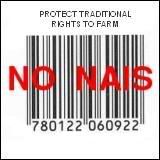
Something’s rotten in Denmark, and it is pervasive in our form of ‘modern’ agriculture or Agri-Business, Industrialized Farming, or Factory Farms; choose you name de plume! As the above quote in the title head of this article points to - if our collective intelligence of modern society cannot figure out “it’s not good to put manure in your mouth” human or otherwise, then we are past the point of no return. The (ill) logic does not end there; consider milk replacer, pharmaceuticals in the food and genetic manipulation of the seed crops. HELLO………isn’t anyone listening other then the NSA?
Something’s rotten in Denmark, and it is pervasive in our form of ‘modern’ agriculture or Agri-Business, Industrialized Farming, or Factory Farms; choose you name de plume! As the above quote in the title head of this article points to - if our collective intelligence of modern society cannot figure out “it’s not good to put manure in your mouth” human or otherwise, then we are past the point of no return. The (ill) logic does not end there; consider milk replacer, pharmaceuticals in the food and genetic manipulation of the seed crops. HELLO………isn’t anyone listening other then the NSA?
Even a cursorily bit of research in to the monstrous practices of Monsanto and their ilk of genetic manipulating genies brings to mind old Wile E. Coyote cartoons of mad scientists with their ACME ray guns hell bent on world domination or destruction as their work proceeds to explosive and dynamite endings. One can’t help when reading the technical wizardry of working over the “biotechnology products” previously know as “seed” and think of the 70’s commercial that warned us ‘you shouldn’t fool with mother nature………..’ Oh well, if she complains too loudly I’m sure the legion of lawyers and “Field Agents” in black SUV’s can be rolled out in short order to explain to her that it’s no longer her seed and show her the patent rights and that her continued complaints would be construed as slander and subject to suit and legal action because her fields (and the whole earth) has been contaminated with their “biotechnology input traits” that she is not approved to grow. Alas, perhaps they could have gleaned wisdom from Hamlet’s wit as he suggested in this phrase that human knowledge is limited: “There are more things in heaven and earth, Horatio, then are dreamt of in your philosophy [Science]. “
There is more to write (and a little to rant) about, but it has been now three days and the hour is past one (AM) since I began this entry that is long becoming an essay. So in ‘news-esque’ fashion I will say “Film at Eleven” or ‘The Revolution Marches On’ or perhaps just ………………(to be continued)
Stay Tuned Next Time, for such topics as:
Luck Be a Lady
Fragility thy name is Woman!
The lady doth protest too much
And…Get thee to a Nunnery
As you might have guessed, we’re breaking out the Shakespeare lighting up the Barbie and having a bit of summer fun! Regards.
posted by Hexdek16 @ Thursday, May 25, 2006
2 comments